Juhil Modi
Computer Science undergraduate · Scaler School of Technology and BITS Pilani · Bengaluru, India
I'm in the third year of a full-time undergraduate programme at Scaler School of Technology in Bengaluru, and I'm earning a B.Sc. (Hons.) in Computer Science from BITS Pilani in parallel (CGPA 8.93/10). I work on machine learning for scientific data, mostly radio signals, satellite imagery and, more recently, collider open data.
Research interests
- Anomaly detection. Label-free and weakly supervised searches, and the ways they can produce false signals.
- Data-quality monitoring. Finding inconsistent records, instrument artefacts and pipeline faults before they reach a result.
- Signal search in radio data. Narrowband and periodicity search in filterbank and LOFAR data, with radio-frequency-interference (RFI) context.
- Earth observation. SAR and multispectral pipelines, and geospatial foundation-model embeddings.
Projects
- Anveshan Founder · private beta
An Earth-observation platform that turns satellite data into reviewable, source-backed evidence. - ExoSignal Personal research · ongoing
Narrowband and periodicity search in radio telescope data, with data-quality context on every candidate. - Collider open-data study 2026 · open source
Dimuon resonances in CMS data and a label-free anomaly search on the LHC Olympics dataset. Summary · GitHub - DRISHTI Smart India Hackathon 2026 · team lead, team of 6
Camera-only navigation for off-road vehicles without GPS. GitHub - Cropland mapping ITU GEOAI Challenge on Zindi · rank 5 · solo
Crop classification from Sentinel-1 and Sentinel-2 time series. - Drone imagery and hydrology IIT Bombay Geo-AI Hackathon · 1st prize · team of 4
Segmentation of drone orthophotos and drainage extraction from point clouds. - Sentinel / NETRA Team of 2
Traffic-incident detection from CCTV and drone video, with human review.
Collider open-data study
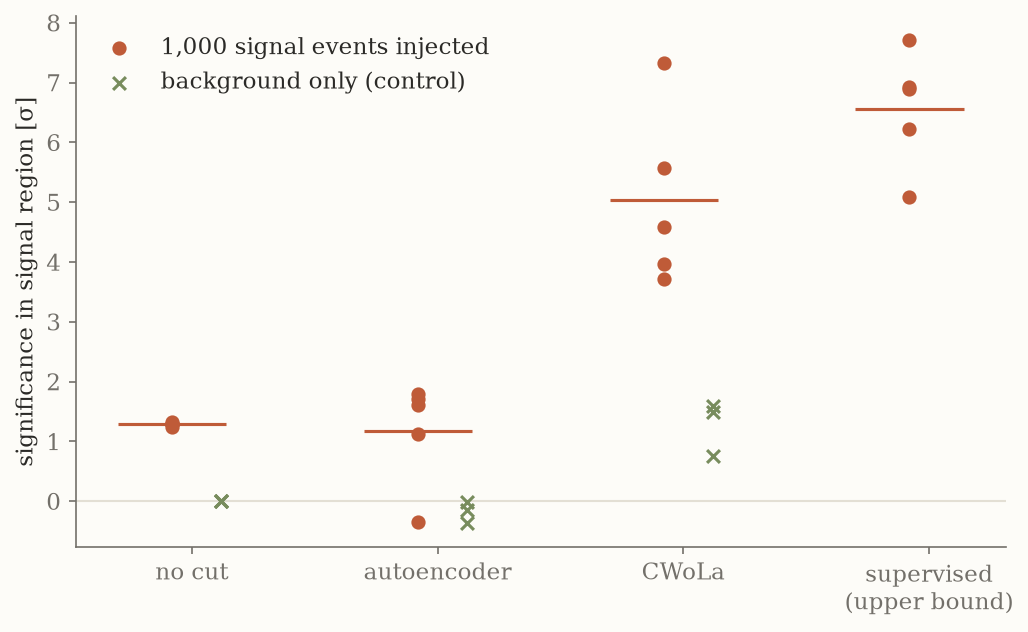
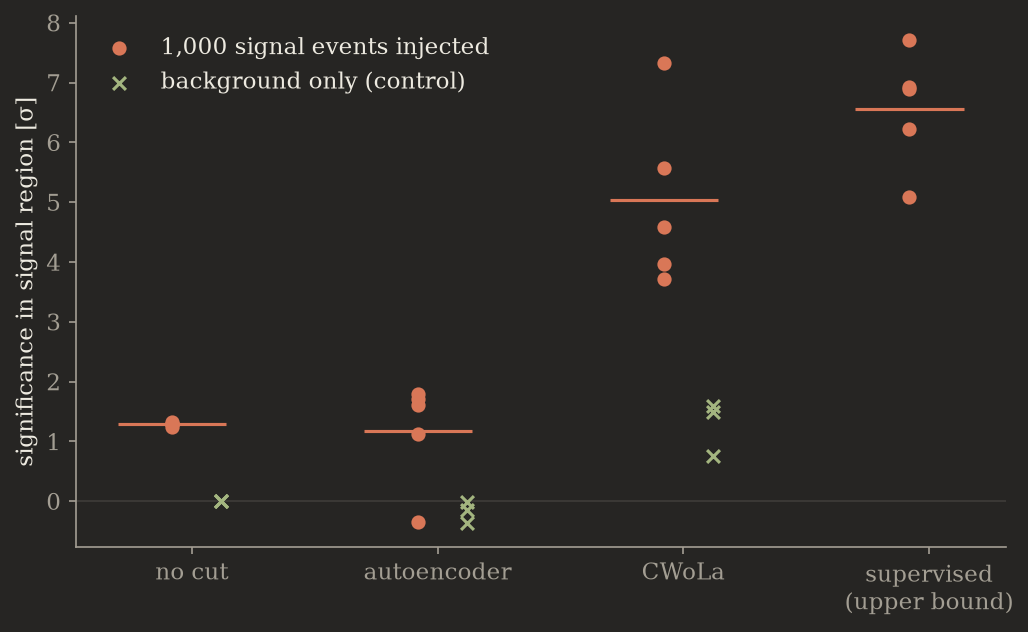
A self-directed study on public particle-physics data. I rebuilt the J/ψ, Υ and Z peaks from CMS 2011 dimuon events, then ran a label-free dijet anomaly search on the LHC Olympics 2020 dataset. The plot compares four selection methods, and the crosses show the false excess each produces on background-only data. Code, results and a full report are on GitHub.
Results and recognition
- 1st Prize, National Geo-AI Hackathon, Techfest 2025–26, IIT BombayTheme 1 winner and Theme 2 finalist, in a team of four. Certificate
- Rank 5, ITU GEOAI Challenge for Cropland Mapping in Dry Environments (Zindi, 2025)Final private leaderboard, 184 active participants, entered solo. Leaderboard
- NASA ROSES-2025 C.12 (FAIMM) proposal, as sole Principal InvestigatorPeer reviewers rated its overall merit "Excellent". It was not selected for funding (August 2026).
- Poster abstract accepted, 2026 Language AI in the Space Sciences Workshop, STScIRadio-spectrogram analysis with contextual retrieval from NASA ADS.
Contact
Email is the best way to reach me. The collider study and DRISHTI are open source; code for the other projects is available on request.
- Email · juhilmodiatwork@gmail.com
- CV · available on request by email
- GitHub · CERN-Anomaly, DRISHTI
- LinkedIn · linkedin.com/in/juhilmodi
- Writing · NNResearch, a history of neural networks
- Also · Signals and messages, a few things from space I find interesting